
Crisis & continuity · 2 min read
Run an earthquake continuity tabletop exercise for a sales team
Practice pause decisions, customer notices and deputy handovers through a discussion-based scenario without disrupting live operations.
By Muntery Strategic
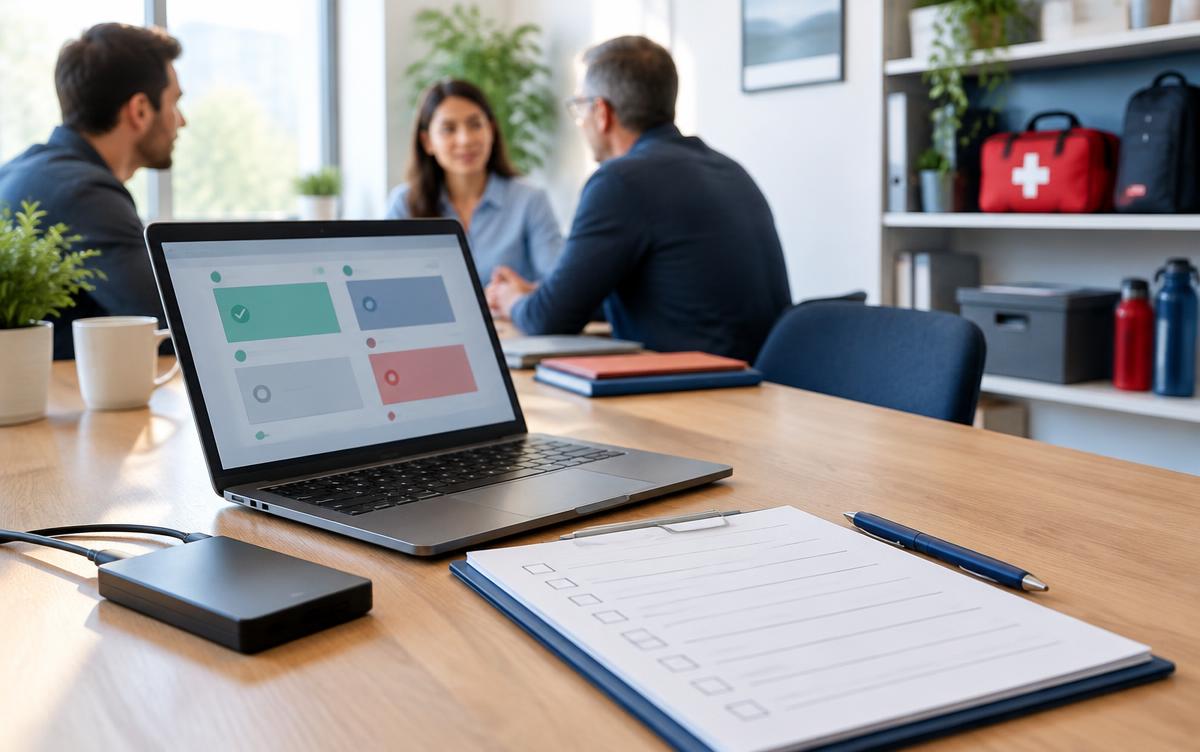
Practice decisions without simulating danger
A tabletop exercise is a facilitated discussion about how the agency would manage business disruption. It should not involve surprise physical drills, fabricated public alerts or instructions to inspect premises. Explain the scenario in advance and allow people to opt out of distressing content.
Use official earthquake guidance as the boundary for public safety matters. The exercise should not ask participants to improvise rescue or structural decisions. Ready.gov's continuity planning resources include exercise materials; use their planning approach to test organizational responsibilities rather than claim emergency-response expertise.
Choose a bounded business scenario
For example, assume an earthquake has disrupted normal work, the campaign manager is unavailable, the CRM cannot be reached and clients still have calendar invitations. Do not add dramatic claims about casualties or future earthquakes. The facilitator can introduce operational changes without making predictions about a real location.
Define success as clear decisions and identified gaps, not uninterrupted sales. Participants should be able to explain who can pause campaigns, who owns client notices and what happens when no deputy is available. Use fictional accounts and avoid sending messages to actual customers.
Prepare an exercise worksheet
Record each decision and the evidence participants would need in a real disruption. A statement that someone would 'just log in' should prompt a question about access and availability, not count as proof the process works.
- Objective: confirm a deputy can authorize and record an outbound pause.
- Scenario input: primary owner unavailable; CRM inaccessible; calendar still active.
- Decision prompts: pause channels, appointment ownership and approved client wording.
- Observer notes: missing access, unclear authority, assumptions and unresolved dependencies.
- Follow-up: named improvement owner, verification method and later retest date.
Turn discussion into verified improvements
Hold a short debrief focused on the process rather than individual performance. Ask which documents were usable, which contacts were stale and which steps depended on unavailable systems. Do not reward participants for proposing unsafe travel, password sharing or excessive work during disruption.
Select a small number of improvements and test them under controlled conditions. For example, verify deputy access without activating live campaigns, or review a sample appointment cancellation without notifying a real prospect. QuakeSmart's broader staff, systems and service framework can help identify omissions. The exercise is successful when uncertainty becomes an owned action, not when everyone agrees the plan looks complete.
Sources & further reading
Put the plan to work.
Explore the related service from Muntery Strategic.
Explore the service